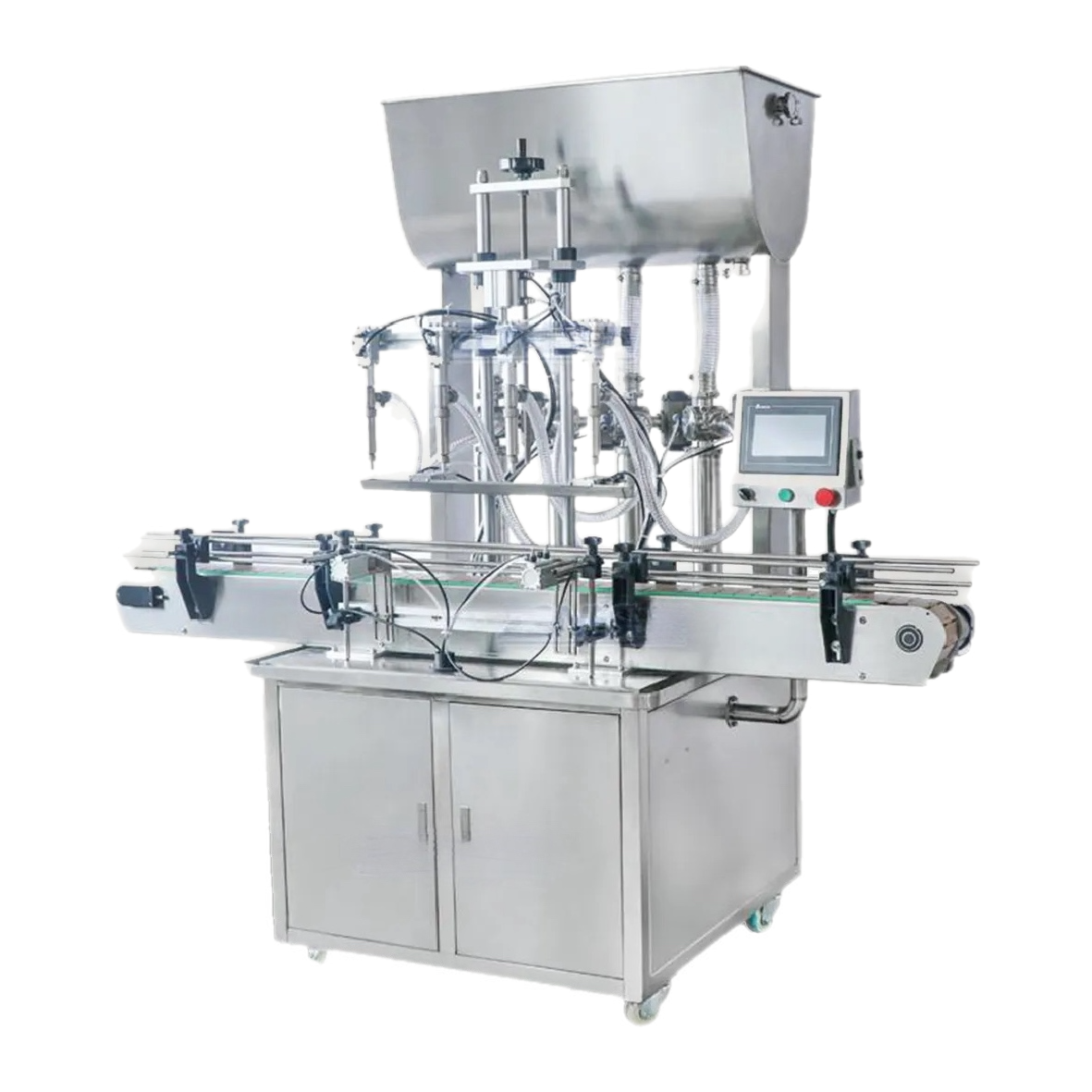
How do filling machines work?
Learn how industrial filling machines measure product, control flow, position containers and coordinate a repeatable filling cycle.
Read the answer
Buyer question library
Use this resource to move from a buyer question to the product, pack, process and acceptance evidence needed for a sound filling-machine decision. Each answer has one clear page owner and links to deeper selection guidance.
How to use the library
The shortest useful answer is often a condition: the result depends on product behaviour, dose, pack geometry, required accepted output, cleaning and line interfaces. Follow the relevant task below, then use the linked checklist to prepare an enquiry or trial.
Define the real product and its difficult operating condition.
Identify whether quantity, level, mass, appearance or piece distribution is the controlled result.
Use representative containers and include the least stable or narrowest-opening format.
State the target accepted output with operator and linked-machine assumptions.
Record open questions in the quotation, URS and acceptance plan.
The pages explain selection and testing principles. They do not replace a product trial, competent safety assessment or the verified specification for a particular Lancing machine.
Learn how industrial filling machines measure product, control flow, position containers and coordinate a repeatable filling cycle.
Read the answerCompare inline and rotary filling-machine layouts by container handling, changeover, footprint, control, output and line integration.
Read the answerUnderstand the difference between liquid-level filling and volumetric filling, including bottle variation, quantity control and inspection.
Read the answerSelect and test filling equipment for liquids and pastes containing pieces, fibres, seeds or suspended solids without guessing passages or performance.
Read the answerIdentify the product-contact boundary in a filling machine and review hoses, seals, valves, nozzles, materials, drainage and cleaning access.
Read the answerUnderstand bottom-up filling, when nozzle travel may reduce foam or splash, and which product, container and trial conditions must be proved.
Read the answerAssess whether one filler can run several products, doses and containers by reviewing product path, recipes, format parts, cleaning and trial evidence.
Read the answerWrite a filling-machine user requirement specification covering product, packs, output, accuracy, cleaning, safety, controls, FAT and SAT.
Read the answerCompare gross-weight and net-weight filling sequences, tare handling, container variation, weigh hoppers and acceptance evidence.
Read the answerExisting technical guides
These established guides provide the detailed process after the initial question has been answered.
Compare piston, pump, peristaltic, vacuum, auger and weigh methods.
Open the guidePlan samples, conditions, observations and acceptance evidence.
Open the guideDefine sustainable accepted packs with normal line states and operator work.
Open the guideDefine the controlled variable, measurement system, sampling and calculation.
Open the guideTrace requirements into factory and installed evidence.
Open the guideWork from the observed symptom through product feed, dosing, nozzle and pack handling.
Open the guideAsk a specific question
A useful answer begins with the real product condition, dose range, containers and target accepted output. Include samples or drawings where available.