
Direct answer
Define the boundary before choosing materials or cleaning methods
- Trace product from the supply vessel or connection through every hose, pump, valve, seal and nozzle.
- Include branches, returns, sampling points and retained-product pockets where product can enter.
- Review elastomers, tubing and lubricated interfaces as well as visible metal components.
- Assess compatibility against the real product, concentration, temperature, cleaning chemistry and contact time.
- Define how the product path is drained, dismantled, inspected and verified before restart.
Map the complete product path
A reliable specification names each product-contact component and identifies the interfaces where responsibility changes. This may start at a customer-supplied tank outlet or at a machine hopper and continue through pumps, manifolds, dosing chambers, valves, seals, hoses, fittings and nozzles.
The material description should not stop at “stainless steel”. Product compatibility can depend on grade, surface condition, elastomer, tubing, gasket, adhesive, lubricant, cleaning agent and temperature. For food applications, the buyer should also review applicable food-contact requirements and obtain the necessary declarations for the actual materials and intended use.
| Product-path element | Questions to answer | Evidence to retain |
|---|---|---|
| Supply connection or hopper | Where does the machine boundary begin and can all product be recovered or drained? | Drawing, connection specification and cleaning sequence. |
| Pump or dosing chamber | Which internal surfaces, seals and moving interfaces contact product? | Component list, material declarations and maintenance instructions. |
| Hoses and manifolds | Are materials compatible and are lengths, low points and dead legs controlled? | Hose specification, routing drawing and replacement plan. |
| Valves and nozzles | Can product be trapped, cut, aerated or exposed to cleaning blind spots? | Section drawing, dismantling method and trial observations. |
| Cleaning boundary | What is cleaned in place, removed, manually cleaned or replaced? | Written cleaning/changeover method and verification record. |
What are product-contact parts in a filling machine?
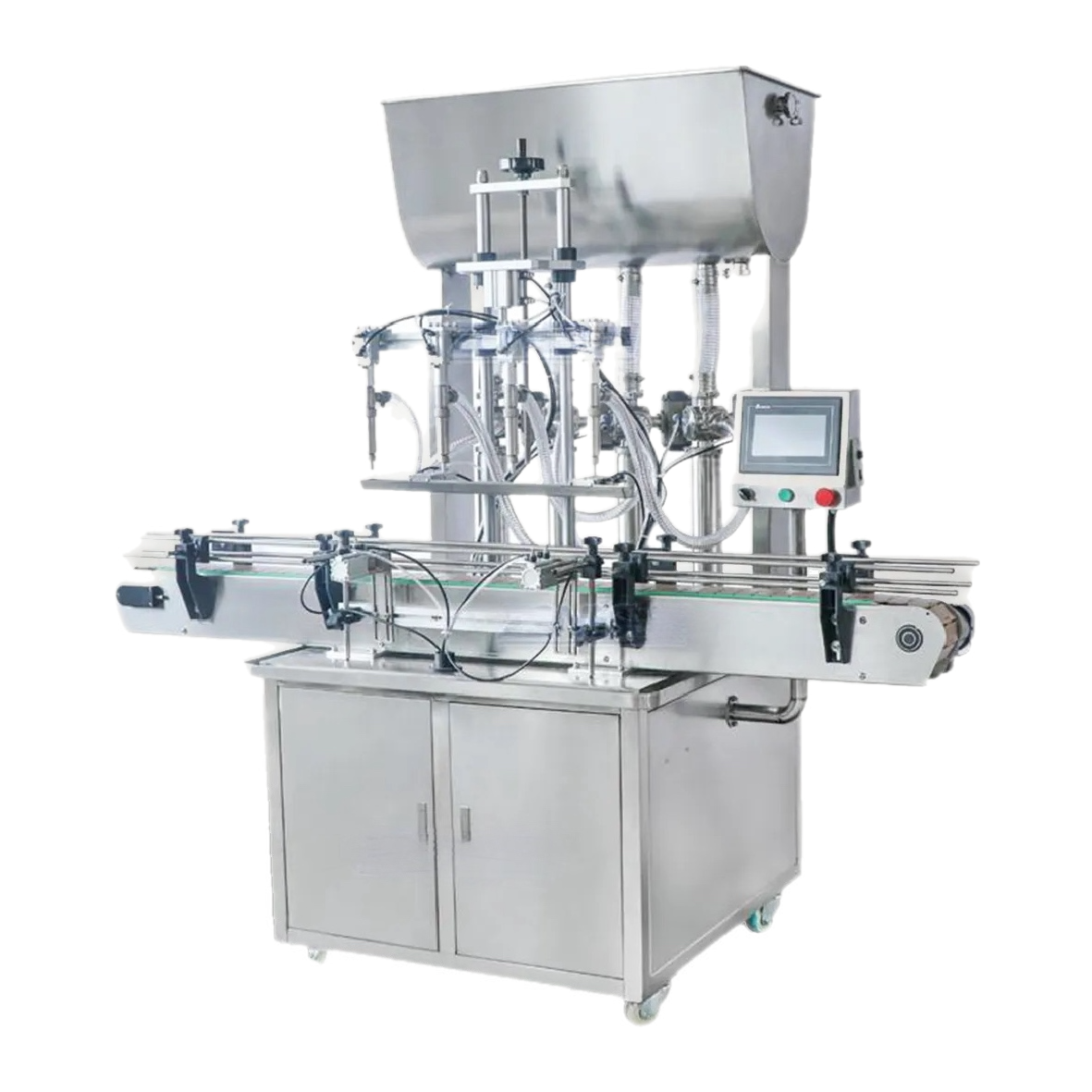
Product-contact parts are all components and surfaces that can touch the product during normal production, recirculation, draining, sampling, cleaning or foreseeable retained-product conditions. They can include tanks, hoppers, pumps, dosing chambers, pistons, valves, manifolds, hoses, tubing, seals, gaskets, fittings and nozzles. The list should be application-specific and linked to a product-flow drawing because a generic parts catalogue may omit customer-supplied connections or optional return paths.
Which components are normally inside the product path?
The product path normally includes the product inlet, supply vessel or hopper, feed device, dosing element, manifolds, valves, flexible connections and filling nozzles, plus any return or recirculation branch that carries product. The exact boundary depends on what Lancing supplies and what the customer provides. State the start and end interface, including connection size and responsibility for upstream tanks or pumps. Include sensors or probes that enter the product and any removable parts used during changeover.
Why do seals and hoses matter as much as metal parts?
Seals and hoses matter because they contact product, flex or wear, can absorb or react with some substances, and may be the limiting component for temperature, cleaning chemistry or service life. Review the specific elastomer or tubing material rather than assuming compatibility from a broad family name. The product safety data sheet, concentration, temperature, cleaning agent, pressure and contact time all inform the assessment. Replacement intervals and traceability should be included in the maintenance plan.
Does a stainless-steel grade alone prove product suitability?
A stainless-steel grade alone does not prove that a complete filling path is suitable because surface condition, fabrication, welds, crevices, seals, hoses, cleaning method and the product environment also affect compatibility and cleanability. For food-contact applications, consult the UK Food Standards Agency guidance on food contact materials and obtain relevant supplier declarations for the intended use. Chemical, pharmaceutical or hazardous applications require their own competent review; a generic material statement is not a substitute for that assessment.
How should the cleaning boundary be defined?
The cleaning boundary should state which product-contact parts are cleaned in place, removed for cleaning, manually wiped, flushed, replaced or excluded from the machine supply. Document the drain points, dismantling tools, inspection access, cleaning agents, rinse verification and controlled restart. Identify product traps and low points before the design is fixed. The cleaning and changeover guide can be used to turn this boundary into a repeatable operating method.
Product-contact information to include in a quotation request
- Product identity, concentration, temperature range and current safety data sheet where applicable.
- Required product-contact material, declarations or internal standards, without assuming a grade is sufficient.
- A marked product-flow boundary showing customer and supplier interfaces.
- Cleaning agents, contact time, temperature and dismantling expectations.
- Expected product recovery, drainage and acceptable residual-product condition.
- Replacement and traceability requirements for hoses, seals, tubing and other wear parts.
Final suitability depends on the real product, pack, environment and integrated process. Use representative samples and agree the acceptance method before the machine design is fixed.