

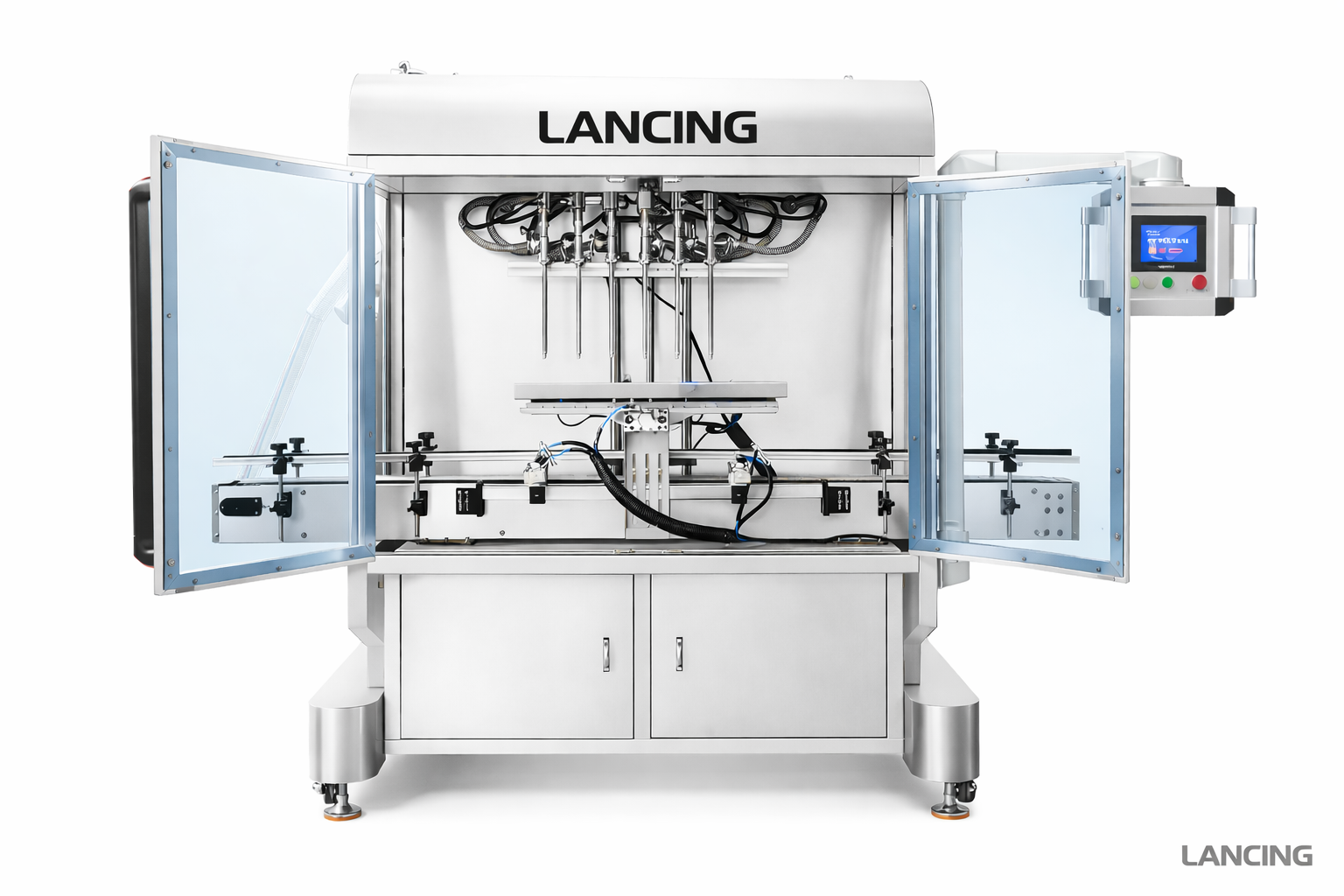
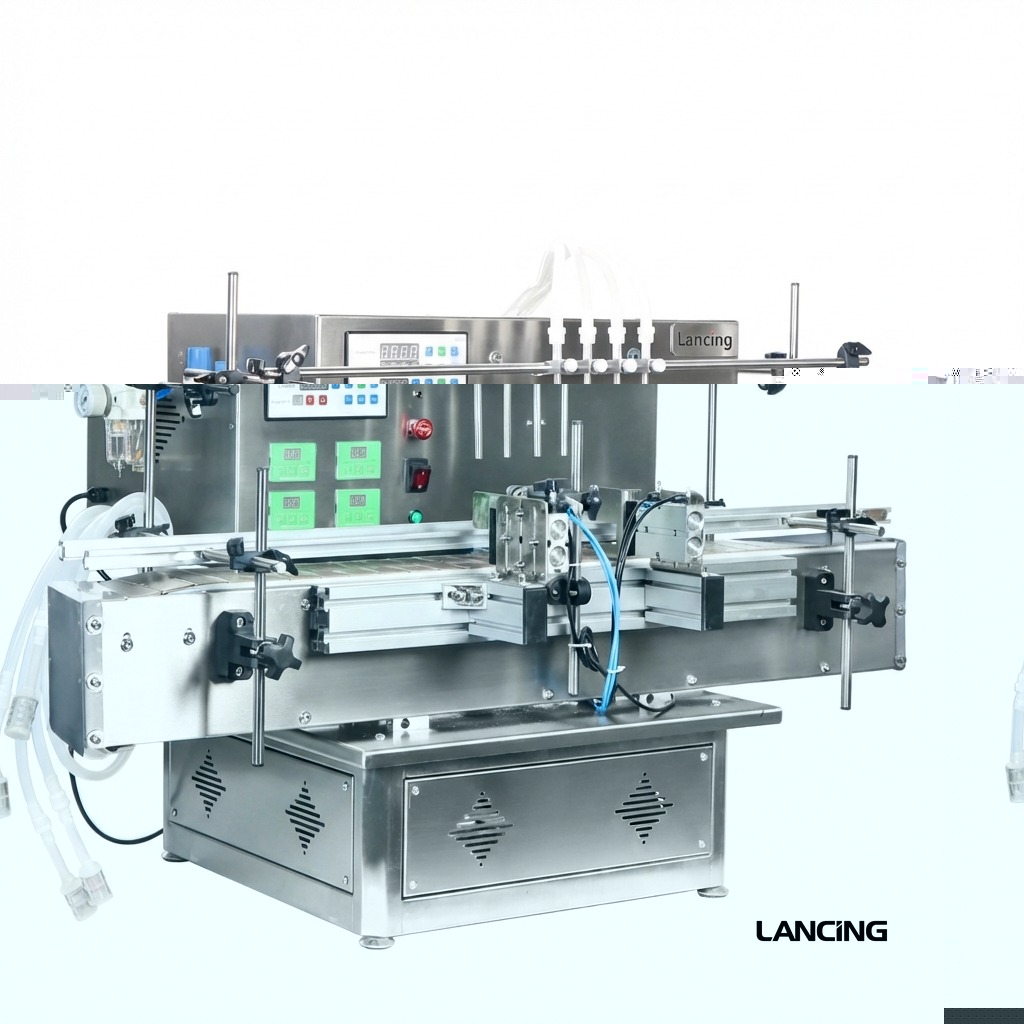
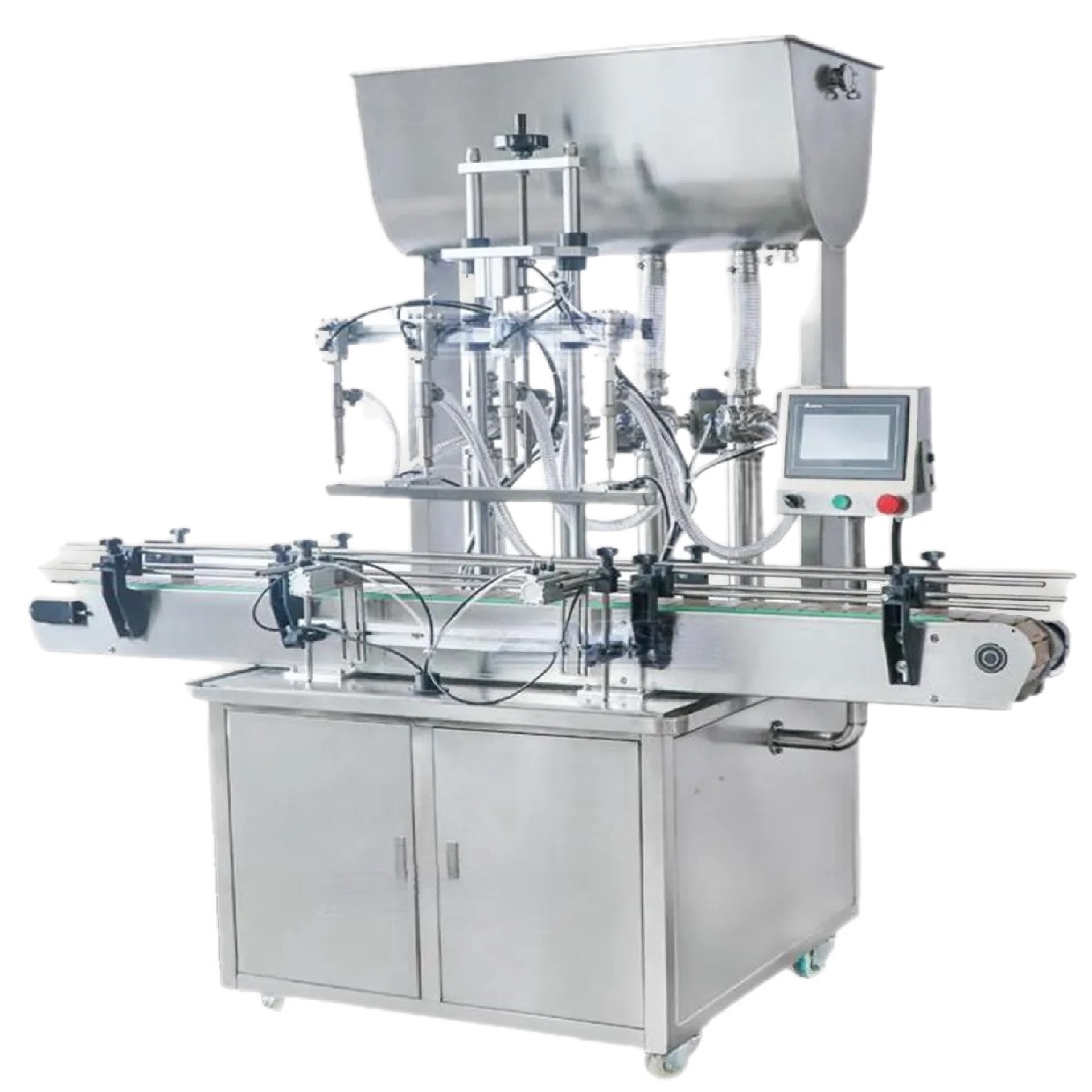
Can one bottle filler run round, square and oval containers?
One bottle filler can run round, square and oval containers only when each shape can be separated, guided, stopped and supported repeatably and the neck position aligns with the available nozzle centres. An oval bottle may rotate against guides, while a square bottle can catch at transitions. Provide every format and test the least stable or most asymmetric pack. Adjustable rails alone do not prove full compatibility.
Why is neck-centre position more important than bottle width?
Neck-centre position is critical because the filling nozzle must align with the opening; two bottles with the same body width can place the neck at different offsets or move differently within guides. Use dimensioned drawings and samples. Define whether the pack is located by body, neck, base, puck or side guides. Nozzle entry and bottom-up travel need additional clearance.
What is no-bottle-no-fill control?
No-bottle-no-fill control prevents a filling command when the machine does not detect a correctly presented container at the required station. The sensor must detect the real pack range reliably and the logic must deal with gaps, transparent materials or misalignment. The control reduces product discharge without a pack, but it does not replace physical containment or a safe fault response.
How should lightweight bottles be supported during filling?
Lightweight bottles should be supported according to their base, body and neck stability so nozzle entry, product impact, conveyor movement and nearby packs do not cause tipping or deformation. Options can include guides, neck handling, pucks, clamps or controlled back pressure, depending on the pack. Test empty and partly filled conditions because stability changes during the dose. Include downstream closure handling in the same review.